
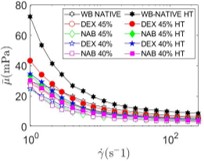
Rheological characterization of complex fluids will be performed in the Biorheology laboratory of Dr Kaliviotis and his team. This involves the use of the rheological instruments to measure and analyse the behaviour of the complex fluids. Rheological characterization will include: shear-rate/viscosity curves, stress relaxation and complex viscoelastic moduli and viscosity, normal stress differences, yield stress, extensional viscosity, structural characterization under controlled flow conditions, molecule aggregation characterization under various flow conditions, cell/molecule deformation characterization, surface tension and contact angles. The data obtained from these tests will then be analysed to gain an understanding of the dynamic behaviour of the fluids in various conditions.
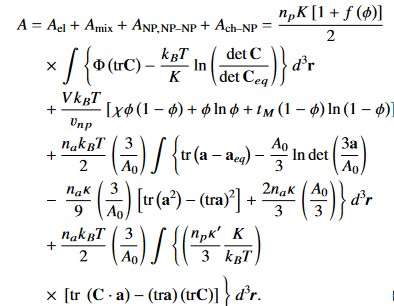
Τheoretical modelling, such as the constitutive equations based on non-equilibrium thermodynamics modelling (by collaborator Dr. P. Stephanou and his team), will be incorporated in numerical schemes for the prediction of viscoelastic parameters including relaxation modulus, shear stress and normal stress differences. The particular modelling approach suits very well, and would be applied, on the case of Collagen-based hydrogels and solutions. The particular gels and solutions exhibit thixotropy and viscoelasticity in combination with yield properties, which affect significantly the production aspects such as mixing and extrusion. Furthermore, models that have been derived to predict blood rheology, developed by Dr. P. Stephanou and Dr. E Kaliviotis, and extensively compared against literature rheological data, will be extended to handle a rouleaux size distribution. The modelling prediction will be compared with the experimental results from rheological characterization.

Novel approaches in Machine Learning and Deep Learning (DL) will be applied for deepening our understanding in the relation between complex fluids microstructure, flow and rheological properties. Collaborators Dr. M. Averkiou and Dr. V. Vassiliades, have substantial experience in Computer Vision and Image analysis, using machine learning and DL techniques, and it is expected that new information would be extracted from the application of such methods. For instance, random forests will be used for RBC aggregation and blood coagulation characterization, and Convolutional Network approaches4 would provide deeper insights into the aforementioned phenomena. Based on the outcome of the aforementioned analysis new indices would be developed. The collaborating SML lab of Prof. Chatzis at CUT will assist in this task.
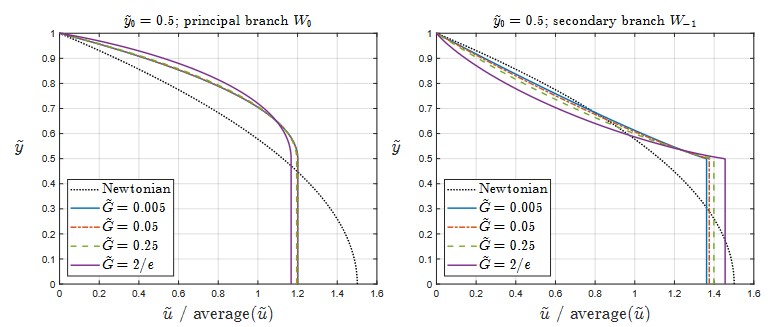
Computational modelling of non-Newtonial flows
CFD and numerical studies will be performed by collaborators Prof. G. Georgiou and Dr. A. Syrakos at the University of Cyprus. Specifically, for the case of hydrogels undergoing extrusion process it will be of particular interest to investigate the flow dynamics in the dumping section of the extrusion configuration in order to optimize the production process. Further, simulations of blood flow in various geometries can be performed: one blood flow geometry of particular interest is the surface tension driven (capillary) geometry used in the DIACTMOND fluidic device. The abovementioned constitutive equations for blood, shall be utilised in these CFD studies, as elastocapillary effects in free surface flows play an important role3. Flow simulations can shed light in many aspects of blood flow in these configurations..
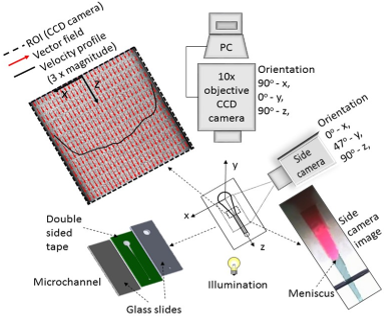
Fluidics and microfluidics have become important for complex fluid and soft matter characterization, as they can handle very small volumes of fluids and at the same time characterize the microstructure of the fluid and capture dynamic flow situations. The existing fluidics apparatus in the Biorheology Laboratory of Dr. Kaliviotis can cover a large range of microfluidic tests, and offer flow control and pressure sensing. A small scale Dry-Film Lithography station, will enhance the capabilities of the proposed CRaFTC.
Our Industrial Partner Embio Diagnostics, lead by CEO Constantinos Loizou, and his team, provides crucial knowledge and help on the development of devices for rheological and diagnostic purposes. Embio is also leading the effort for ISO-certification of the CRaFTC facilities.